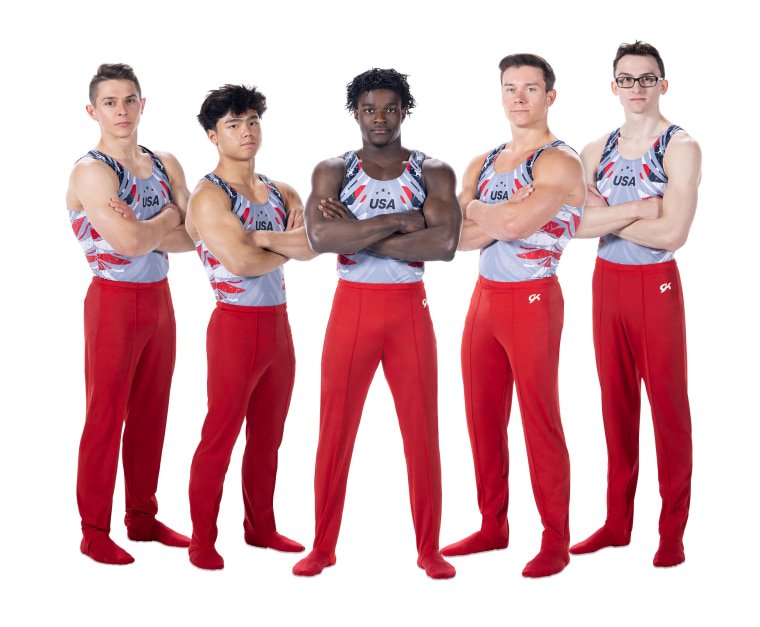
At the 2022 World Artistic Gymnastics Championships in Liverpool, male competitors wore fitted tank tops and short shorts on every apparatus. The look has changed a lot since the 1970s, when looser shirts and longer pants were common. Readers exploring gymnastics outfit men will also find context in Nashville Teen Missing Since July 2023 Was Found Safe: What Happened
How Men’s Gymnastics Attire Compares to Other Sports
Men’s gymnastics outfits share some features with wrestling singlets and weightlifting singlets, but they differ in important ways. Gymnastics tops are usually made of polyester-spandex blends that stretch in every direction. Unlike a wrestling singlet, a men’s gymnastics tank leaves the arms fully free for swings on high bar and rings. wikipedia.org/wiki/Rhythmic_gymnastics” rel=”noopener noreferrer” target=”_blank”>Rhythmic gymnastics
Shorts end above the knee, which helps judges see body alignment during handstands and splits. In track and field, sprinters wear loose shorts that can hide form issues. In gymnastics, every line of the body is visible, so fit matters more than in most sports.
Rhythmic gymnastics uses leotards for women, but men’s artistic gymnastics has no equivalent full-body suit. Male gymnasts compete in a top and shorts, not a one-piece. This split style allows more freedom for hip movement on pommel horse and vault. gkelite.com/collections/gk-gym-men” rel=”noopener noreferrer nofollow” target=”_blank”>Gymnastics Men Apparel | GK Elite
How Competition Outfits Are Designed and Produced
Most elite gymnastics outfit men wear comes from a handful of specialized manufacturers. Companies like Adidas, Nike, and GK Elite produce team uniforms that meet FIG (Fédération Internationale de Gymnastique) rules. These rules require outfits to be clean, fitted, and not excessively decorated.
Designers start with fabric selection. The material must wick sweat, hold its shape after hundreds of flips, and resist tearing on rough grips. Many competition tops use a mesh panel on the back for ventilation. Shorts often have a reinforced waistband that stays flat during inversions.
National federations usually order team outfits months before a major event. A federation might request a design that reflects national colors or symbols. The FIG checks outfits before competition to make sure they meet coverage and fit standards. An outfit that is too loose or too sheer can lead to deductions or a request to change.
How Men’s Gymnastics Attire Evolved Over Decades
In the early 20th century, male gymnasts often competed in long-sleeved shirts and full-length trousers. Photos from the 1936 Berlin Olympics show athletes in high-neck tops that would look out of place in a modern arena. Fabrics were heavier and less elastic than today’s blends.
By the 1970s, shorter shorts and sleeveless tops began to appear. Soviet and Japanese gymnasts led the shift toward more fitted clothing. The change was partly practical: lighter outfits made it easier to perform complex releases on high bar and double backflips on floor.
The 1990s and 2000s brought brighter colors and bolder patterns. National teams started using custom prints and reflective elements. At the same time, the FIG tightened rules about logos and decorations. Today, most elite men wear simple, solid-color tops with minimal trim.
Current Trends and What the Future May Hold
Many national teams now refresh their competition outfits every Olympic cycle. For the 2024 Paris Olympics, several federations introduced new designs with updated cuts and fabric technology. Some teams added subtle texture patterns that catch light under arena spotlights.
There is growing interest in sustainable materials. A few manufacturers are testing recycled polyester for gymnastics wear. It is not yet clear whether these fabrics will meet the durability demands of elite competition.
Fit preferences also continue to shift. Some gymnasts prefer a slightly looser top for comfort on rings, while others want a second-skin fit for floor exercise. Coaches report that athletes spend more time than ever choosing their competition outfits, treating them as part of their overall performance strategy.
| Feature | Men’s Artistic Gymnastics | Wrestling Singlet |
|---|---|---|
| Top style | Fitted tank or short-sleeve | One-piece singlet |
| Shorts | Above the knee | Integrated into singlet |
| Arm coverage | None | Varies by cut |
Frequently Asked Questions
Who sets the rules for men’s competition outfits?
The Fédération Internationale de Gymnastique sets the rules for men’s competition outfits. The FIG requires tops and shorts to be fitted, non-transparent, and free of excessive decoration. Officials can ask a gymnast to change if an outfit violates these standards.
When did men start wearing tank tops in competition?
Men began wearing tank-style tops more widely in the 1970s. Photos from the 1972 Munich Olympics show some athletes in sleeveless shirts, though long sleeves were still common. By the 1980s, tank tops had become standard for most male gymnasts.
How many outfit sets does an elite gymnast use per season?
An elite gymnast may use several competition outfits per season, though exact numbers vary by athlete and federation. Teams often order multiple sets of the same design to account for wear, damage, and different events across a long competition calendar.
What is the difference between practice and competition wear?
Practice wear is usually more casual and durable, often including t-shirts and longer shorts. Competition wear follows FIG rules and uses higher-grade fabrics with a more precise fit. Many gymnasts wear warm-up suits over their competition outfits between apparatuses.
Is custom team wear required at major events?
Custom team wear is not strictly required, but most national federations choose it for a unified look. The FIG allows individual designs as long as they meet coverage and fit rules. Some smaller programs use off-the-shelf competition outfits instead of custom orders.
Leave a Reply